Carpal Tunnel Syndrome
A comprehensive guide to understanding, treating, and preventing CTS
Overview
Carpal Tunnel Syndrome is one of the most common nerve disorders, affecting 4-10% of the general population. It occurs when the median nerve, which runs from your forearm through a passage in your wrist called the carpal tunnel, becomes compressed or squeezed.
This compression leads to the characteristic symptoms of numbness, tingling, and pain in the hand and arm. While CTS can significantly impact daily activities and quality of life, early recognition and proper treatment can prevent permanent nerve damage and restore normal function.
Understanding the Anatomy
The carpal tunnel is a narrow passageway located on the palm side of your wrist. This tunnel protects the median nerve and flexor tendons that bend your fingers and thumb.
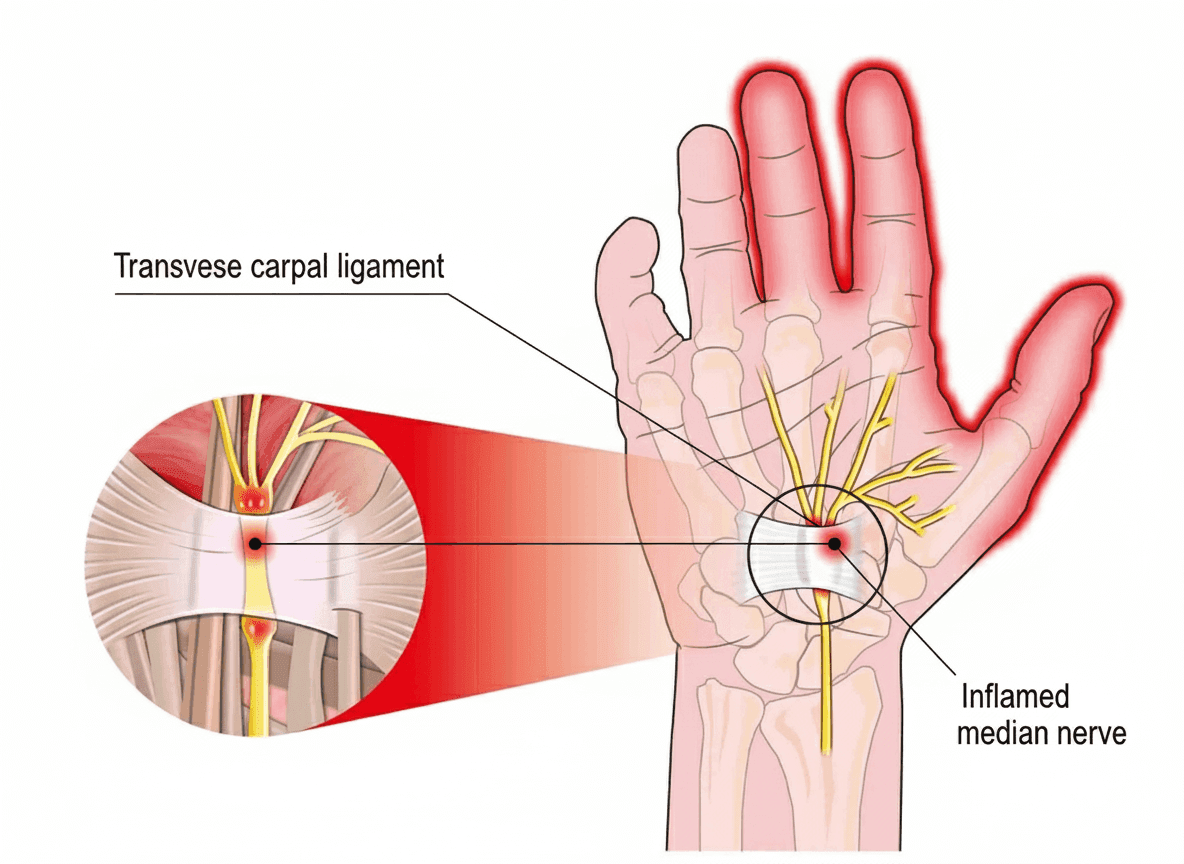
Key Structures:
- Inflamed Median Nerve
- The main nerve passing through the carpal tunnel, shown here with swelling/irritation.
- Provides sensation to the thumb, index, middle, and part of the ring finger.
- Controls some hand muscles essential for grip and fine movement.
- When inflamed or compressed, it causes numbness, tingling, pain, and weakness — the classic signs of carpal tunnel syndrome.
- Transverse Carpal Ligament
- A strong band of connective tissue forming the roof of the carpal tunnel.
- Holds the median nerve and flexor tendons in place.
- When thickened or tight, it can increase pressure on the nerve.
Recognizing the Symptoms
CTS symptoms typically develop gradually and may initially come and go. Early recognition is crucial for effective treatment.
Early Warning Signs
- •Occasional numbness or tingling in thumb and fingers
- •Symptoms that come and go
- •Discomfort when holding objects
- •Night-time hand discomfort
Advanced Symptoms
- •Constant numbness or tingling
- •Weakness and muscle atrophy
- •Loss of grip strength
- •Difficulty with fine motor tasks
Important: If you experience persistent symptoms or notice muscle weakness, consult a healthcare professional for proper evaluation and treatment.
Treatment Options
Conservative Treatment
First-line treatments that are effective for 90% of mild to moderate cases:
- •Wrist splinting, especially at night
- •Activity modification and ergonomic improvements
- •Targeted exercises and stretches
- •Anti-inflammatory medications
Exercise Therapy
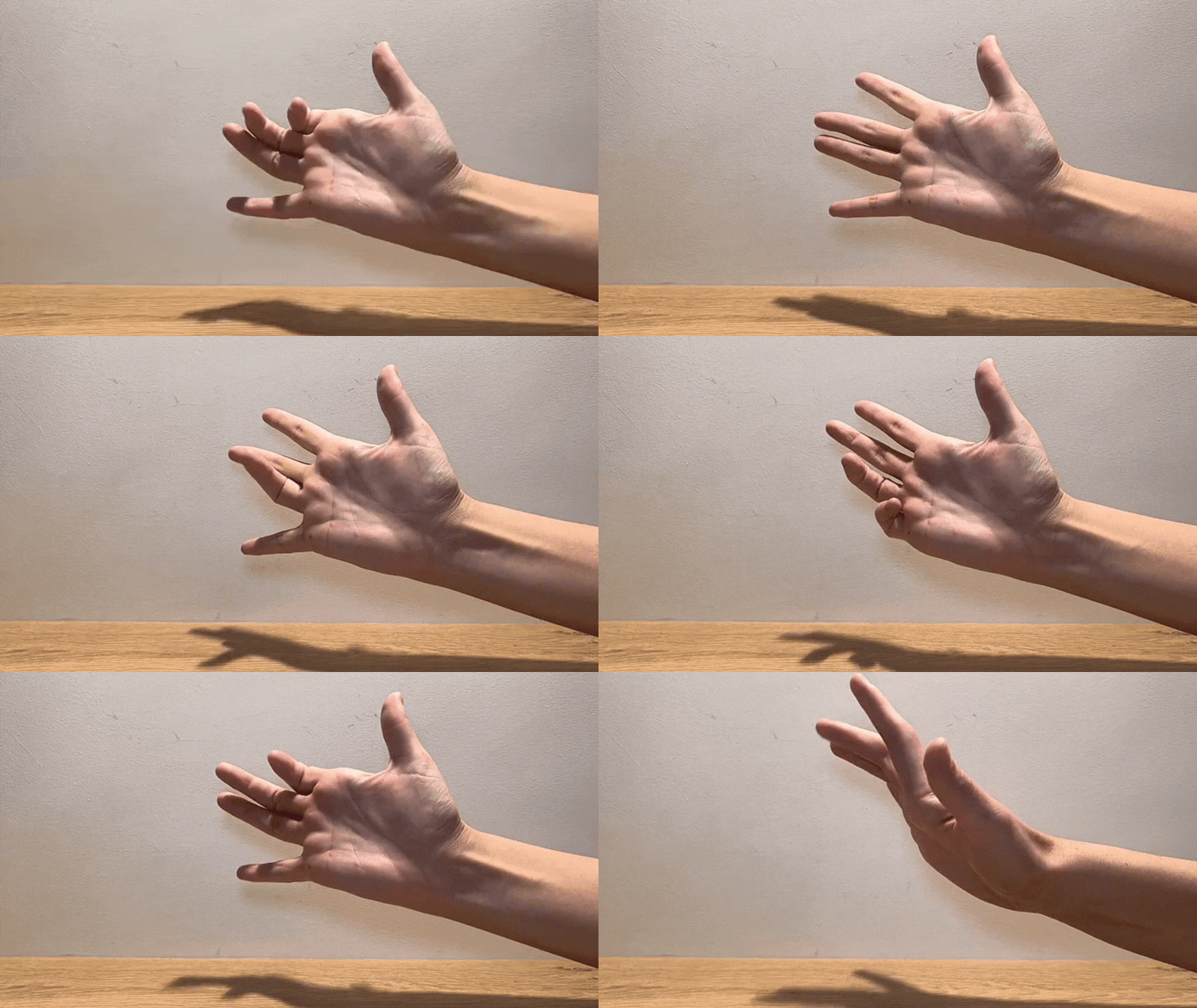
Evidence-based exercises form the foundation of recovery. Regular practice of nerve gliding, tendon gliding, strengthening, and stretching exercises can significantly improve symptoms and prevent recurrence.
Prevention Strategies
Ergonomics
Proper workstation setup with neutral wrist position
Regular Breaks
5-minute breaks every hour from repetitive tasks
Exercise
Daily stretches and strengthening exercises
Workplace Modifications
Carpal Tunnel Syndrome - FAQs
What is Carpal Tunnel Syndrome?
A compression neuropathy: the median nerve is compressed as it passes through the carpal tunnel at the wrist, producing sensory and motor disturbances in the hand.
What are the main symptoms?
Common symptoms include:
- Tingling, numbness and burning pain in the thumb, index, middle and radial half of the ring finger
- Occasional shock-like sensations
- Hand weakness (especially reduced thumb pinch/grip)
- Symptoms that commonly wake patients at night
Note: Severe or longstanding cases can cause thenar muscle wasting.
What causes Carpal Tunnel Syndrome?
Extra pressure on your median nerve causes carpal tunnel syndrome. The carpal tunnel has space for all the parts that pass through it, but if one part of your wrist is swollen or damaged, it can press on other tissue around it, including your median nerve.
Anything that causes swelling or irritation in your wrist can cause carpal tunnel syndrome:
- Repetitive strain injuries
- Arthritis
- Sprains
- Wrist fractures (broken wrist bones)
- Ganglion cysts
Who is at higher risk?
Higher risk groups include:
- Women - 3x more likely than men
- Age group - People aged 40-60
- Occupational - Jobs requiring repetitive wrist motions
- Medical conditions - Diabetes, thyroid disorders, rheumatoid arthritis
- Pregnancy - Due to fluid retention
- Genetics - Those with family history of CTS
Office workers, assembly line workers, and musicians are also at increased risk.
How is it diagnosed?
Diagnosis typically involves:
1. Physical Exam
Your healthcare professional tests the feeling in the fingers and the strength of the muscles in the hand. Bending the wrist, tapping on the nerve or simply pressing on the nerve can trigger symptoms in many people.
2. Electromyography
This test measures the tiny electrical discharges produced in muscles. A thin-needle electrode is inserted into specific muscles to evaluate the electrical activity. This test can identify damage to the muscles controlled by the median nerve and rule out other conditions.
3. Ultrasound
An ultrasound of the wrist provides a picture of the tendons and nerves. This can help show whether the nerve is being compressed.
Can it go away on its own?
Carpal tunnel syndrome (CTS) does not usually go away completely by itself, but symptoms can sometimes improve temporarily, especially if the condition is mild and caused by short-term factors like:
- Swelling from pregnancy
- Repetitive overuse
- Fluid retention
In such cases, symptoms may ease once the underlying cause resolves.
Important: In most people, if the pressure on the median nerve continues, symptoms may persist or gradually worsen over time. Without treatment (rest, activity changes, splinting, therapy, or medical interventions), CTS can lead to permanent nerve damage, weakness, or muscle wasting in the hand.
Are there exercises that can help?
Yes - specific exercises can help manage CTS symptoms:
- Nerve-gliding (tendon/median-nerve mobilization) exercises
- Gentle wrist/median nerve glides
- Graded stretching
These are commonly used as part of conservative care and occupational therapy. Combined with activity modification, they can reduce symptoms for some patients.
Note: Evidence is mixed and exercises are most effective as part of a broader non-surgical program.
Can Carpal Tunnel Syndrome be prevented?
You can reduce risk/progression by:
- Ergonomic adjustments - Maintain neutral wrist posture, reduce forceful gripping
- Frequent micro-breaks - Take regular breaks from repetitive activities
- Manage risk factors - Control weight, diabetes, thyroid disease
- Wrist supports - Use when appropriate, especially at night
Note: Not all cases are preventable as some are due to systemic or anatomical factors.
Why are symptoms worse at night?
Night symptoms worsen due to:
- Sleeping wrists often flex or are kept in non-neutral positions which increases intracarpal pressure
- Fluid redistributes when lying down and can increase nerve compression
Both factors make numbness, tingling, and pain worse at night.
Can Carpal Tunnel Syndrome affect both hands?
Yes, CTS can affect both hands, although it is often more severe in the dominant hand. Bilateral involvement occurs in a significant proportion of cases due to systemic risk factors such as diabetes, thyroid disease, or repetitive occupational strain.
How long does recovery take?
Recovery depends on severity and treatment type:
- Mild CTS (conservative treatment): May improve within weeks to months with splints, activity modification, and therapy
- After surgical release: Most patients recover within 2–3 months, but full strength recovery can take 6–12 months
Is surgery always necessary?
No. Surgery is recommended when:
- Conservative treatments fail (splinting, corticosteroid injections, ergonomic modifications)
- There is severe nerve compression with muscle weakness or atrophy
Mild and moderate cases can often be managed non-surgically with good results.
What happens if I ignore Carpal Tunnel Syndrome?
⚠️ Warning: Untreated CTS can lead to:
- Progressive median nerve damage
- Chronic numbness
- Weakness and decreased grip strength
- Permanent muscle atrophy of the thenar eminence
This may severely impair hand function and quality of life.
Can massage or physical therapy help?
Yes, physical therapy can be effective for early to moderate CTS:
- Nerve gliding exercises
- Manual therapy
- Ergonomic training
These can reduce symptoms and improve function. Massage may relieve soft tissue tension, but evidence is stronger for structured therapy programs.
Does typing on a computer cause Carpal Tunnel Syndrome?
Typing and computer use alone are not proven to directly cause CTS.
However, prolonged repetitive wrist and finger movements, combined with poor ergonomics, can:
- Increase risk of developing CTS
- Aggravate existing symptoms
Risk is higher in occupations requiring forceful or repetitive hand use rather than typical office typing.
Start Your Recovery Journey Today
We respect your privacy. Unsubscribe anytime.